YouTube growth
YouTube monetization for AI music channels starts with viewer value
YouTube monetization for AI music depends on viewer value signals. Learn how visuals, packaging, stories, thumbnails, and upload rhythm make an AI music channel feel worth watching.

YouTube monetization for AI music is not just a question of whether the song was made with AI. The stronger question is whether the channel gives a viewer a real reason to stay.
A finished Suno, Udio, or AI-assisted track can still feel thin on YouTube if it arrives as one static cover, a repeated loop, and a title that looks like a file name. That kind of upload may technically contain a song, but it does not always feel like a channel experience.
The creator-controllable part is packaging. You can make each release feel intentional before you ask the platform, or the audience, to treat it as valuable.
Start with the viewer promise
Before you publish another track, write one sentence that explains why someone should watch this video instead of leaving the song in the background. Is it a cinematic lyric story? A character-led visual world? A dark synthwave performance mood? A release that builds toward a chorus reveal?
That promise should guide the thumbnail, opening shot, description, title, and video structure. If those pieces all point in the same direction, the upload feels made for viewers rather than generated for storage.
Avoid the static-cover trap
A single album cover can be useful as a visual anchor, but it rarely carries a full channel by itself. Repeating the same motion loop across every upload trains viewers to expect less from the next release.
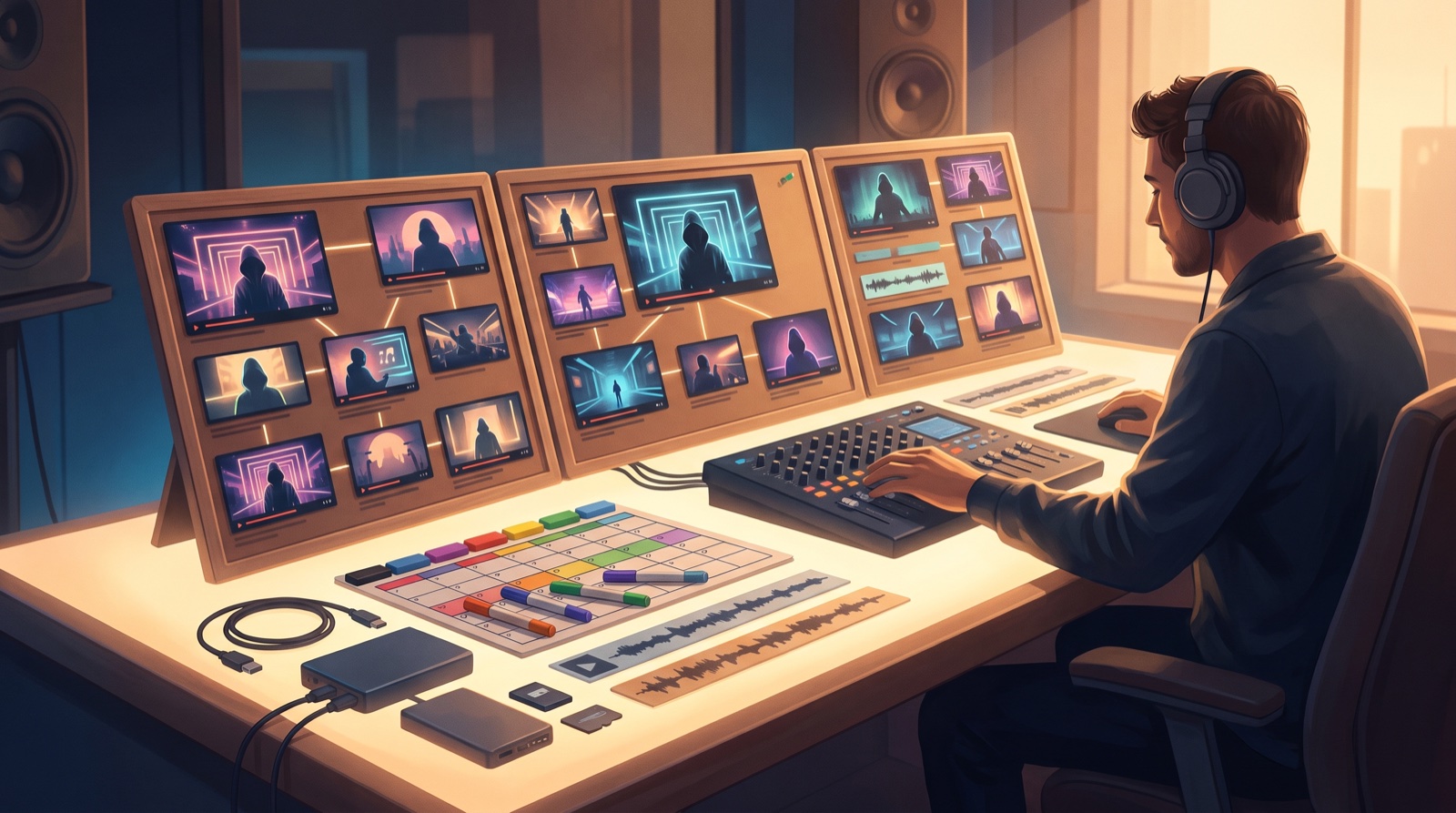
SceneLore is built for this exact last mile: turning a finished song, cover image, or visual idea into a full-length music video with connected scenes. The goal is not decoration. The goal is to give the track enough visual movement to feel like a release.
Make originality visible
If your songs use AI tools, the channel needs visible human choices around them. Use recurring characters, color rules, title-card style, release notes, and behind-the-song context to show that someone is directing the world.
That does not mean overexplaining the tools. It means making the creative intent easy to see. A viewer should understand the mood before the first chorus and recognize your channel before the third upload.
Build stronger upload signals
- Thumbnail: one clear subject, one emotion, and a style that matches the song.
- Title: name the track or hook without stuffing tool terms into every upload.
- Description: add a short story about the song, credits, and links to the artist or release page.
- Video structure: use an opening visual, a few scene changes, and a final image that feels resolved.
- Channel rhythm: publish consistently enough that viewers can recognize the world you are building.
Do not promise policy certainty
Monetization decisions can depend on platform rules, review context, reused material, rights, and how the whole channel looks. Treat public guidance as directional, not a guarantee. YouTube’s own channel monetization policies are still the source to check before you make business decisions.
What you can control is whether your channel feels like a repeatable creative project. That means better visuals, clearer packaging, consistent branding, and a release workflow that makes each song worth watching.
Turn the song into something viewers can watch
If your AI music channel is ready for better release packaging, SceneLore helps you turn finished tracks and cover art into full-length visual stories.
Create Your First Video