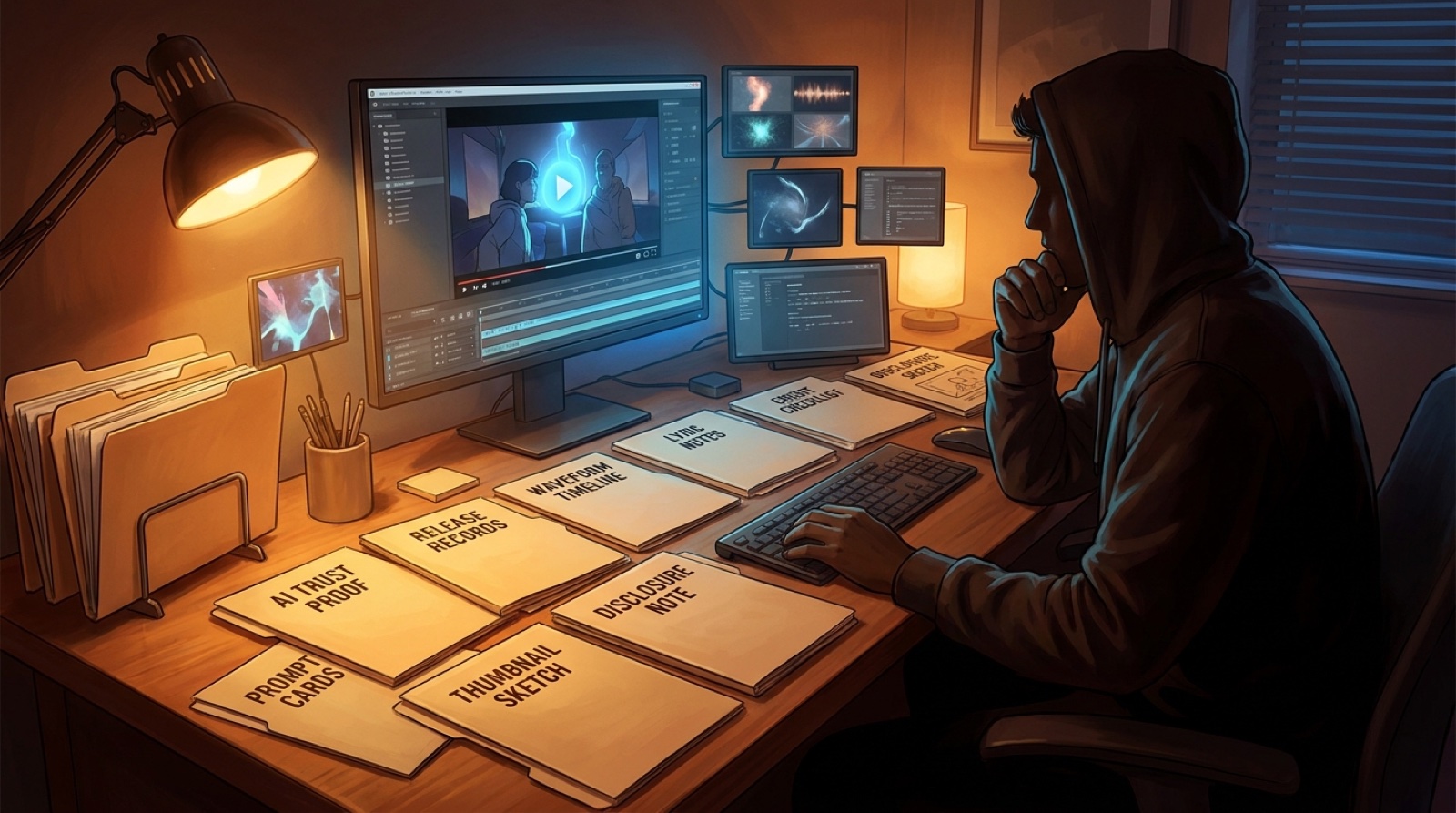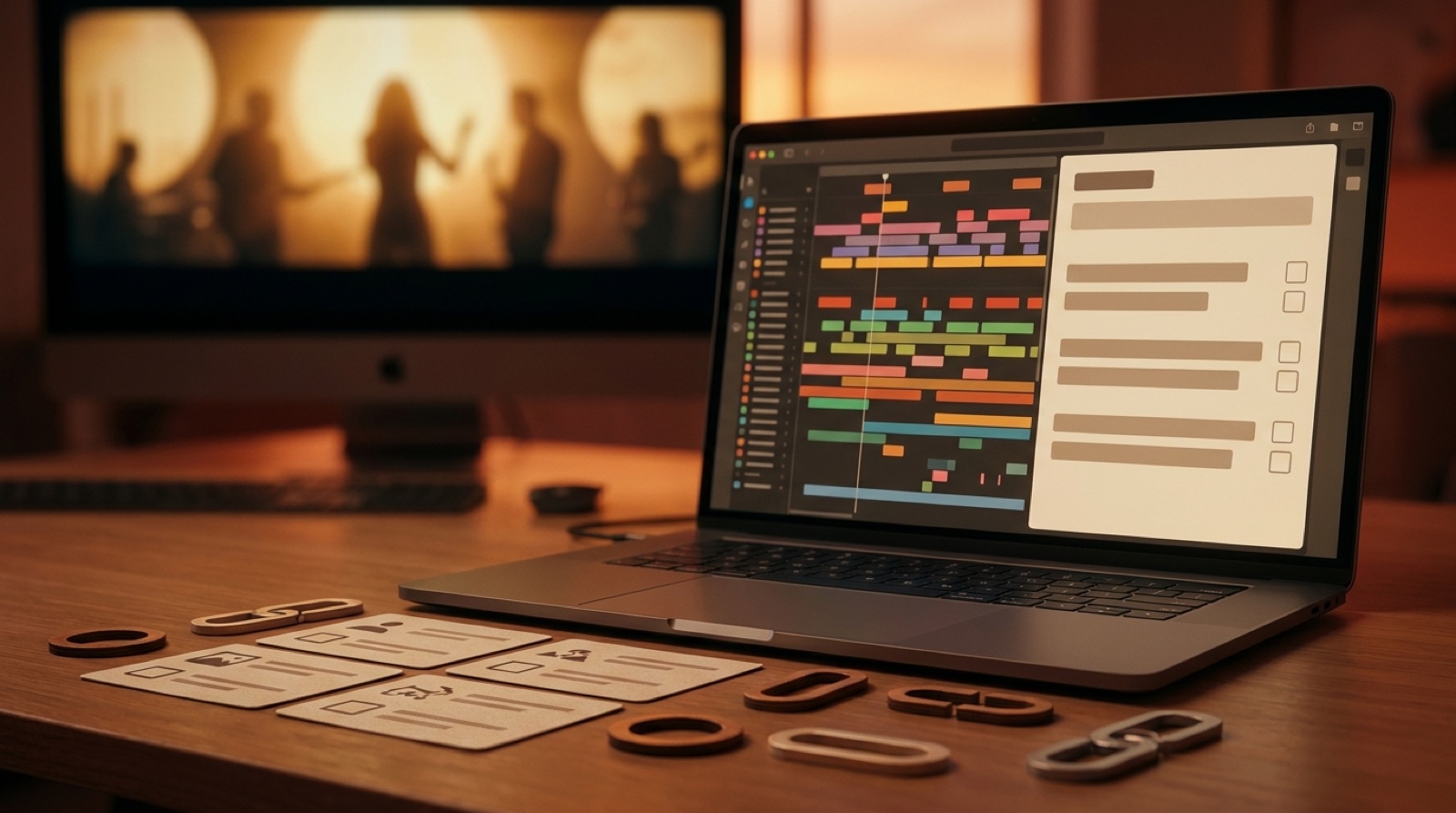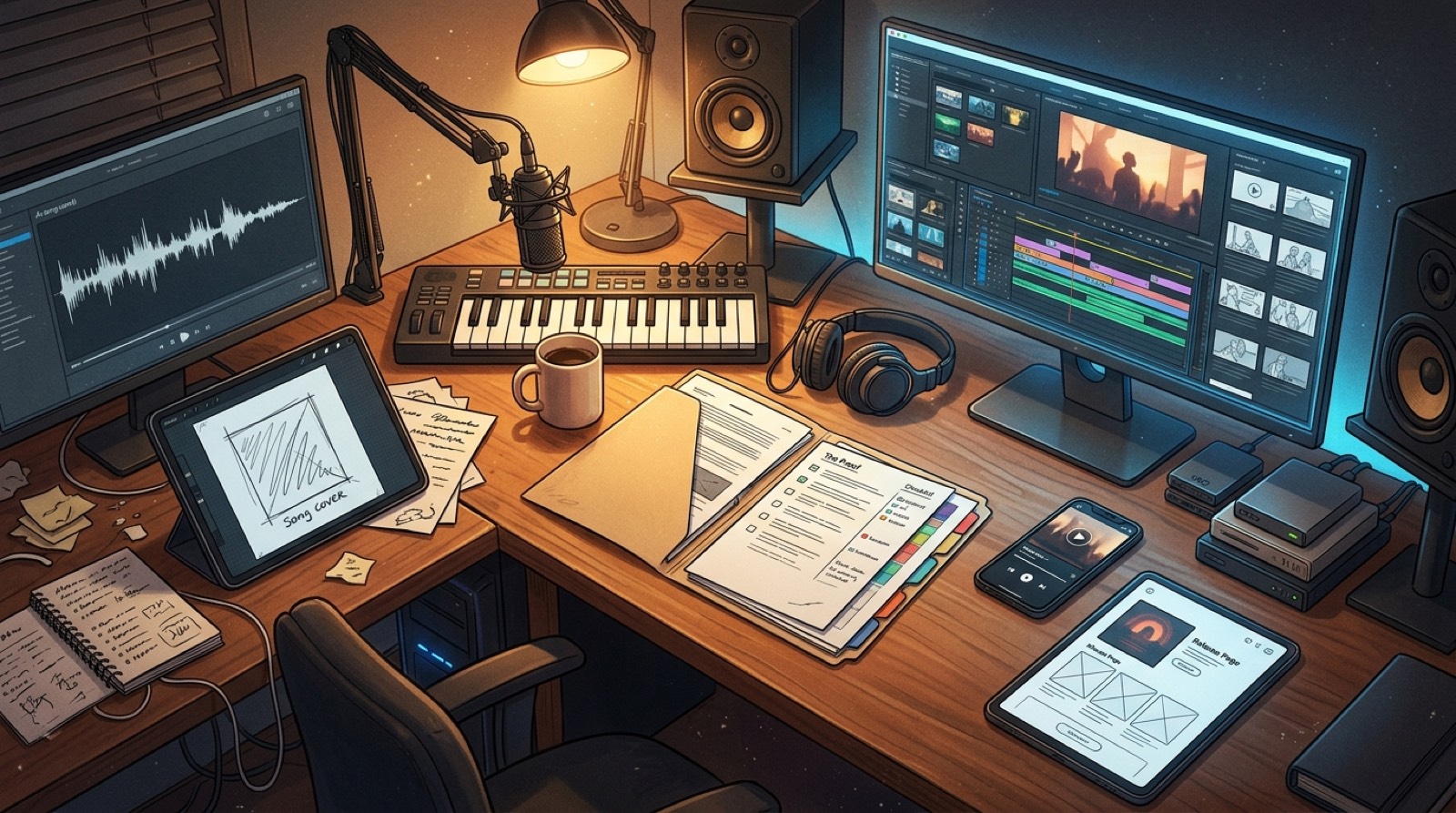
AI music before after assets are not a confession. They are a way to show authorship when the audience cannot see the work that happened between a first generation and a finished release.
A listener may not care which prompt, model, or edit pass came first. They do care whether the release feels deliberate. A simple before-and-after story can make the difference between a disposable upload and a song that looks like someone stood behind it.
The useful frame is transformation: here is the rough starting point, here is the finished world, and here are the choices that made the release feel ready.
Start with the source, but do not let it become the story
The before side should be small and clear. Save the source song link, exported audio, cover draft, lyric sheet, first visual reference, or rough scene board. Put those files in one folder with the date and version.
Do not make the source material the hero of the public release. The point is not to invite people to grade the raw output. The point is to show that the final package was shaped, selected, and finished.
Make the finished video the main proof
The strongest after asset is the full music video. It shows whether the song has a visual anchor, a first frame that sells the mood, scenes that follow the chorus and bridge, and an ending that feels intentional.
If the song only has a static cover, the before-and-after story is thin. A finished video gives the release a visible arc. It lets the artist say, without overexplaining, that the song was packaged for an audience instead of dropped into a feed.
SceneLore can turn a finished track, cover, or visual idea into that complete video package. Create your first video when the release needs more than a still image.
Pair the thumbnail with the first frame
A before-and-after post works best when the thumbnail and first frame agree. If the thumbnail promises a neon city, the opening shot should not begin in a generic abstract loop. If the cover art sells heartbreak, the first frame should carry that tension.
Put the cover draft, final thumbnail, and first frame beside each other. The improvement should be obvious at a glance: clearer mood, stronger contrast, more specific subject, and a better reason to press play.
Use one chorus clip as the proof of motion
Pick one short clip from the chorus, drop, or emotional turn. This is the asset people will actually watch in a feed. It should show the visual world moving with the song, not just the camera drifting over a pretty image.
A good clip answers a practical question: does this video carry the best part of the track? If the clip works, the full video has a stronger chance of feeling worth the watch.
Add a release page or description that explains just enough
The public note should be plain. Name the song, credit collaborators, describe the world of the video, and include disclosure wording when the platform or release context needs it. Avoid defensive language. The release does not need an essay about every tool involved.
For platform guidance, keep an eye on the places where the song will live. YouTube's help page on altered or synthetic content disclosure is a useful reference when a video includes realistic altered content or AI-assisted media.
Keep private version notes for future trust questions
The best proof assets are not always public. Keep a short private note that says which audio file became the release, which cover or reference image was used, what changed in the video, who contributed, and where the final exports live.
This helps when a distributor asks for context, a collaborator needs credit language, or you want to rebuild a release package later. It also keeps the artist from relying on memory when the next song has already taken over.
Show polish without begging for permission
The right before-and-after story is confident. It does not say, "Look, this was not fake." It says, "Here is the raw material, here is the finished release, and here is why the final version feels authored."
That is the standard worth aiming for. Not perfect transparency theater. Not a messy folder dumped into public view. Just enough proof to make the finished song easier to believe.
For a broader trust folder, read AI music trust now depends on the proof you keep. If you need a stronger first impression, start with Use a music video first frame test before the whole render.