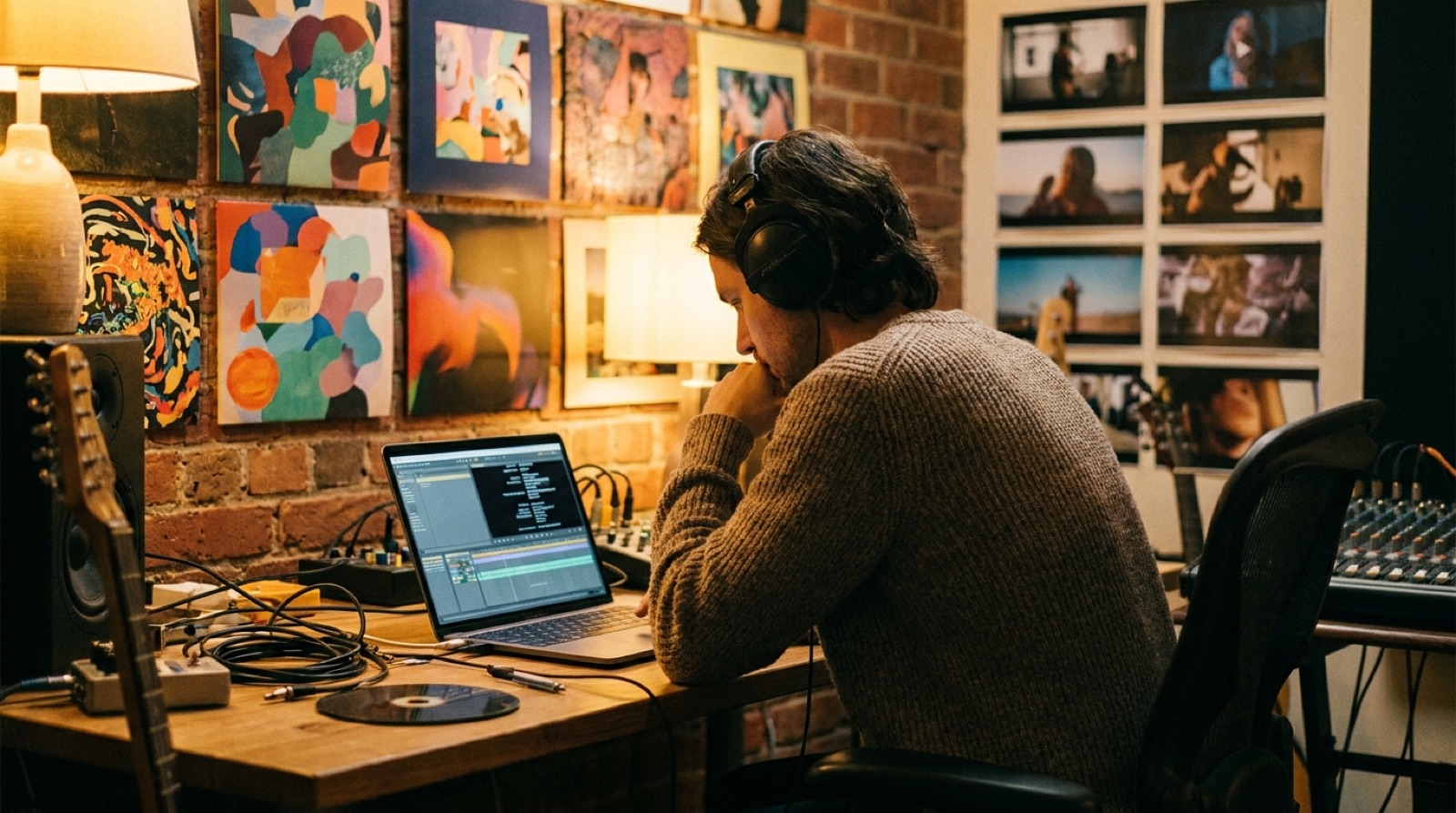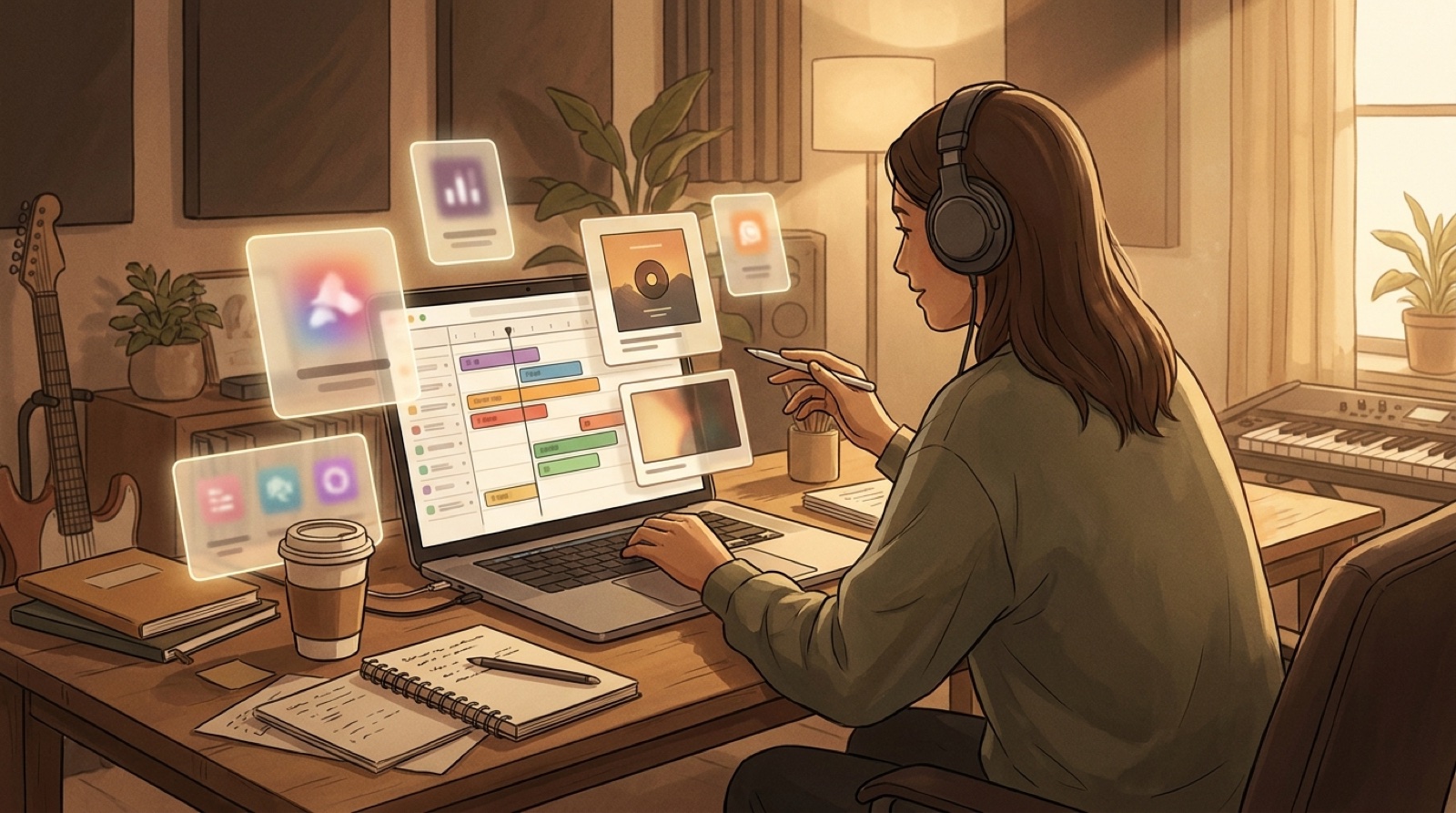
AI music detection is no longer an abstract platform debate. Listeners are getting tools that can scan playlists, labels are becoming more visible, and creators have to assume that some part of the release may be judged before anyone hears the chorus.
That does not mean every AI-assisted artist should panic. It means the release has to look cared for. A song with clear credits, a stable visual world, and a few saved decisions feels different from a file that appeared out of nowhere with disposable cover art.
The trust problem is not solved by pretending the tools were never involved. It is solved by making the human choices easy to see.
Detection changes the first impression
In June 2026, Deezer launched a free AI music detector for playlists across major streaming platforms. Deezer said the tool is available in 27 languages and can scan playlists from 20 common platforms. The company also said 80 percent of people in its Deezer and Ipsos survey wanted AI music to be clearly labeled.
You can read the announcement on Deezer's newsroom: Deezer launches AI music detector for playlists.
The exact accuracy of any detector will keep being argued. Creators still have a more practical issue. If a listener, curator, platform, or distributor sees an AI label, what else does the release show them?
If the answer is only a generic cover and a vague artist page, the label can swallow the whole story. If the answer is a complete release package, the label becomes one detail inside a better first impression.
Make the artist identity visible
People trust releases faster when they can understand who made the choices. That does not require a long manifesto. It can be as simple as a consistent artist name, a clear channel description, a few linked releases, and visuals that feel like they belong to one project.
Use the same identity across YouTube, streaming profiles, release pages, and social posts. Keep the colors, cover style, video mood, and thumbnails close enough that a listener can recognize the project again next week.
This matters even more for AI-assisted music because the tools can make everything feel too interchangeable. A visible identity tells the listener that the song belongs to a person or project with taste, not just a prompt history.
Keep a simple release record
You do not need a legal binder for every song. You do need a lightweight record you can understand later.
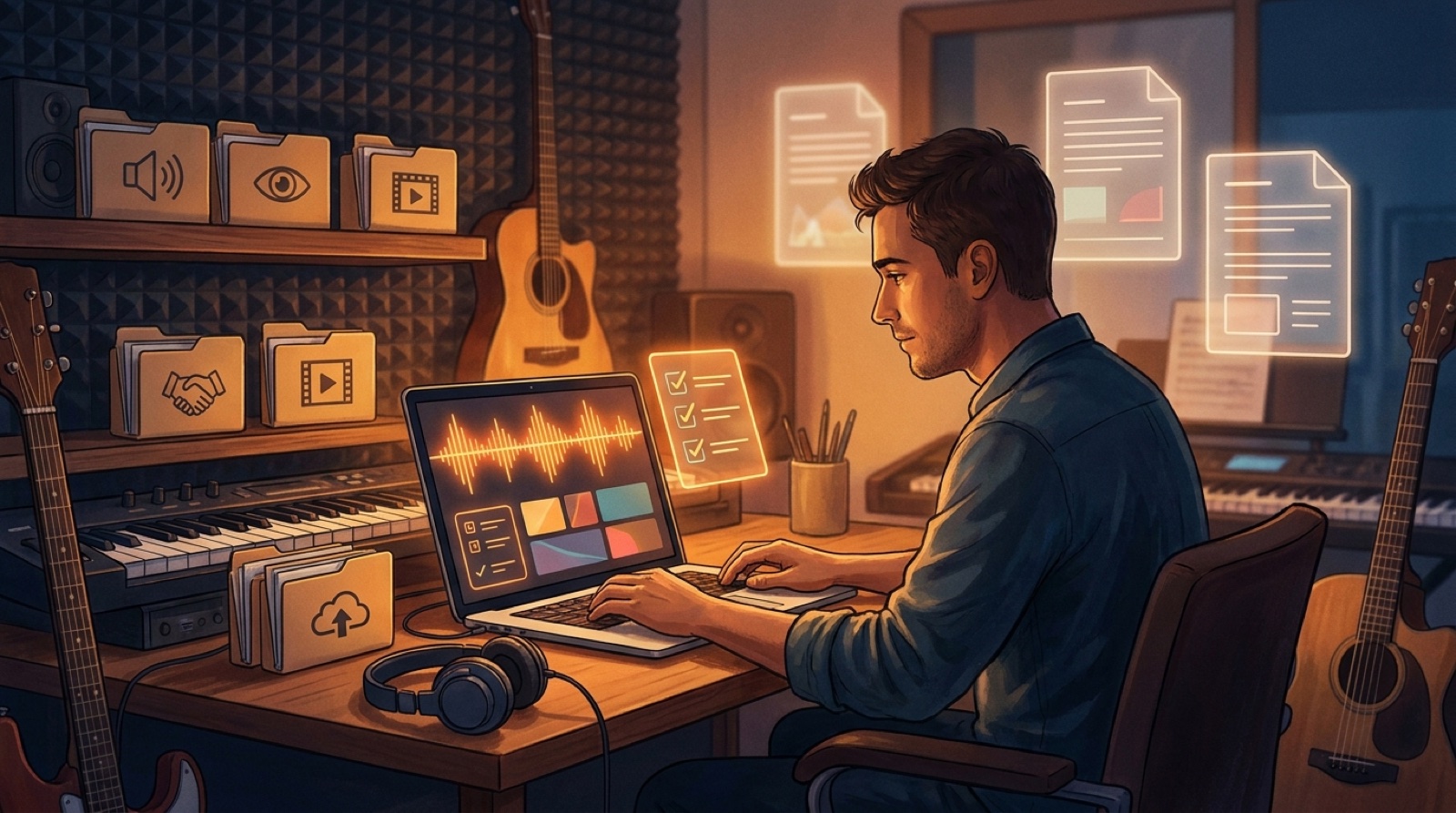
Save the basics:
- Final lyrics and any important lyric changes
- Prompt notes or direction notes for the song
- Audio exports, stems, and final masters
- Cover art source files
- Video direction, thumbnail choices, and final video exports
- Disclosure wording used on each platform
This record helps when a distributor asks questions, when a platform form changes, or when you need to explain the release later. It also makes the next song easier because you are not starting from scattered files and memory.
For a deeper version of this habit, the SceneLore guide on AI music rights anxiety and what creators can control covers the release notes, source files, and platform checks that are worth keeping.
Use disclosure without making the song feel smaller
Disclosure should sound plain, not apologetic. A good note separates tool use from human direction.
For example: "This release uses AI-assisted music and video tools. The artist directed the concept, lyrics, visual style, and final release package."
That kind of sentence gives the listener context without turning the release into a technical report. The goal is clarity. The listener should know what was assisted, and they should also see what you decided.
The existing SceneLore guide on AI music disclosure has more examples for YouTube descriptions, release pages, pinned comments, and artist notes.
Make the video prove intent
A strong music video can do trust work that a text note cannot. It shows that the release has a world, a mood, and a set of choices behind it.
That does not mean the video has to be expensive. It means the visuals should not look random. Start from one anchor: a cover image, character, place, color palette, or genre mood. Then build the video around that anchor so the song feels like it has a direction.
When the thumbnail, opening shot, full video, and short clips all share the same visual language, the release feels planned. That planning is part of the trust signal.
Package the release before upload day
Upload day is the worst time to invent the trust layer. By then you are tired, the files are scattered, and every platform field feels like a small interruption.
Prepare the release package before you press submit:
- Write the artist and song description in normal language.
- Choose the disclosure sentence you will use where needed.
- Export the final cover, full video, thumbnail, and short clips.
- Save the release record in one folder.
- Check that every public link points to the same artist identity.
The AI music release checklist is useful if you want the full pre-upload pass for audio, artwork, video, metadata, and launch files.
Use SceneLore when the song needs a trustworthy visual package
SceneLore helps when you already have the song and need the release to feel finished. Bring in the track, cover direction, or visual anchor, then build a full video and launch assets around the same mood.
Detection tools may shape how listeners and platforms read AI-assisted music. Your job is to make sure the release has enough human intent around it that the label is not the only thing people notice.
FAQ
Can AI music detection tools be wrong?
Yes. Detection tools can be debated, and creators should not treat any single scan as the whole truth. The practical move is to keep clear records and package the release so your human choices are easy to see.
Should I disclose AI-assisted music even if a platform does not ask?
Use the platform rules first. When you add your own note, keep it plain and focused on the creative choices, not a long tool list.
What makes an AI-assisted release feel trustworthy?
A consistent artist identity, clear credits, saved release records, and a video package that feels connected all help the song feel intentional.
Build a release package people can trust
Bring the finished song into SceneLore, choose the visual anchor, and turn the release into a video package that feels deliberate.
Create Your First Video