AI music platform risk is real enough to respect, but vague enough to make creators overreact. A headline about training data, removals, disclosure, or automated review can make every finished song feel fragile.
The practical response is narrower. Release like someone could understand the project in ten minutes. Show the artist identity. Keep the files. Make the video world coherent. Write the credits and disclosure before the upload screen forces you to improvise.
That will not control every platform decision. It will make the release easier to defend, easier to promote, and easier for listeners to trust.
Platform risk gets worse when the project looks anonymous
The weakest AI music release is not always the strangest one. Often it is the one with no clear owner, no visual pattern, no credits, no story, and a generic thumbnail that could belong to any channel.
Platforms are under pressure to separate intentional creative work from low-effort bulk uploads. Listeners are doing a faster version of the same thing. If the release looks anonymous, people have less reason to give it the benefit of the doubt.
A clear artist identity gives the song context before anyone audits the details. It says this release belongs to a project with taste, continuity, and someone making decisions.
Write the identity before you write another prompt
Start with a short identity note. What kind of artist world is this? What moods appear often? What should a viewer recognize after three releases? What should never appear because it breaks the promise?
This does not need to become a huge brand document. A useful version can fit on one page: artist name, visual anchors, color behavior, recurring settings, credit style, disclosure tone, and how the videos should feel in the first ten seconds.
When that note exists, every cover, thumbnail, description, and music video has something to answer to. The release stops feeling like a one-off generation and starts feeling like part of a catalog.
Keep a proof folder for every serious release
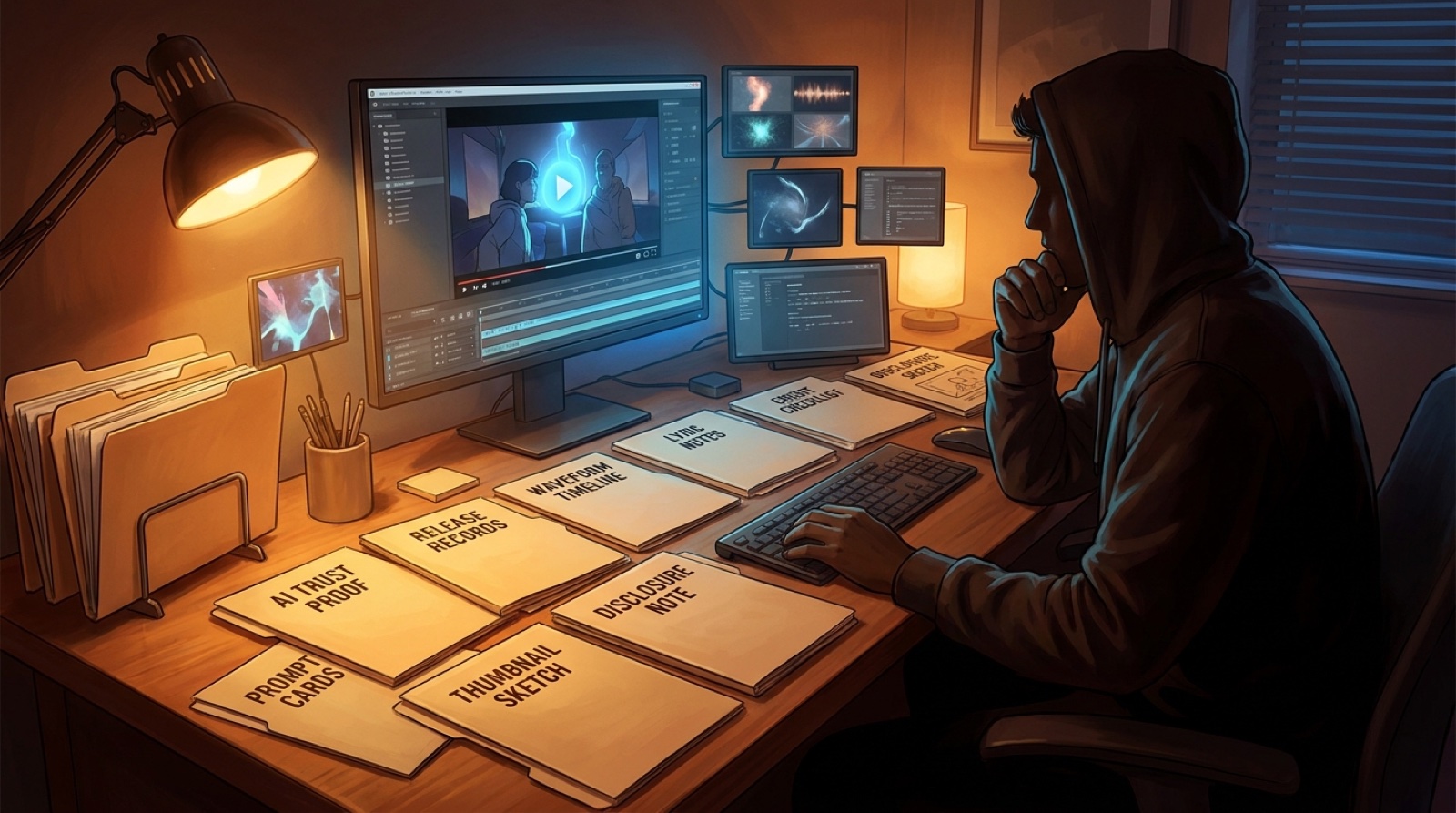
A proof folder is the private version of release confidence. Put the source audio export, cover art, lyrics or writing notes, prompt notes when relevant, collaborator credits, license or plan receipts, disclosure wording, thumbnail, video export, and final metadata in one place.
The point is not to publish every private detail. The point is to avoid scrambling later if a distributor asks a question, a platform review gets weird, or a collaborator needs a clean credit trail.
For a deeper version of this habit, read AI music trust now depends on the proof you keep.
Make disclosure sound calm, not defensive
AI-use notes work best when they are plain. Explain what was AI-assisted, what was human-directed, and what the listener is actually getting. Avoid legal fog and avoid apologizing for the tools.
A calm note might say that the track, visuals, or video used AI-assisted tools under the artist's direction, then name the human choices that shaped the final release. Pair that with credits and a finished visual package so the note feels like context, not damage control.
YouTube's guidance on altered or synthetic content is a useful reminder that platform expectations keep changing, so keep your wording easy to update: YouTube disclosure requirements for altered or synthetic content.
Use video packaging to make the release legible
A consistent music video does more than decorate the song. It makes the artist world easier to read. The first frame, thumbnail, color, setting, and motion style can all tell the viewer that the release was assembled with intent.
That matters when AI music feels interchangeable. A full video built around a stable visual anchor gives the song memory. It also gives you cleaner material for Shorts, release pages, press notes, and future proof of what the release looked like when it went live.
SceneLore turns a song, cover, or visual idea into a full music video package with a consistent world behind it. Create your first video when the release needs more than a static upload.
Check metadata like it is part of the artwork
Titles, artist names, credits, descriptions, release dates, file names, and cover art should agree with each other. Small mismatches make the package feel careless, and careless packages are easier to doubt.
Before upload, compare the distributor fields, YouTube description, thumbnail file, video title, release page, and proof folder. Make sure the same song name, artist name, collaborators, and disclosure note travel together.
This is boring work until it saves a release. Then it becomes part of the creative system.
Build the release page before you need to explain yourself
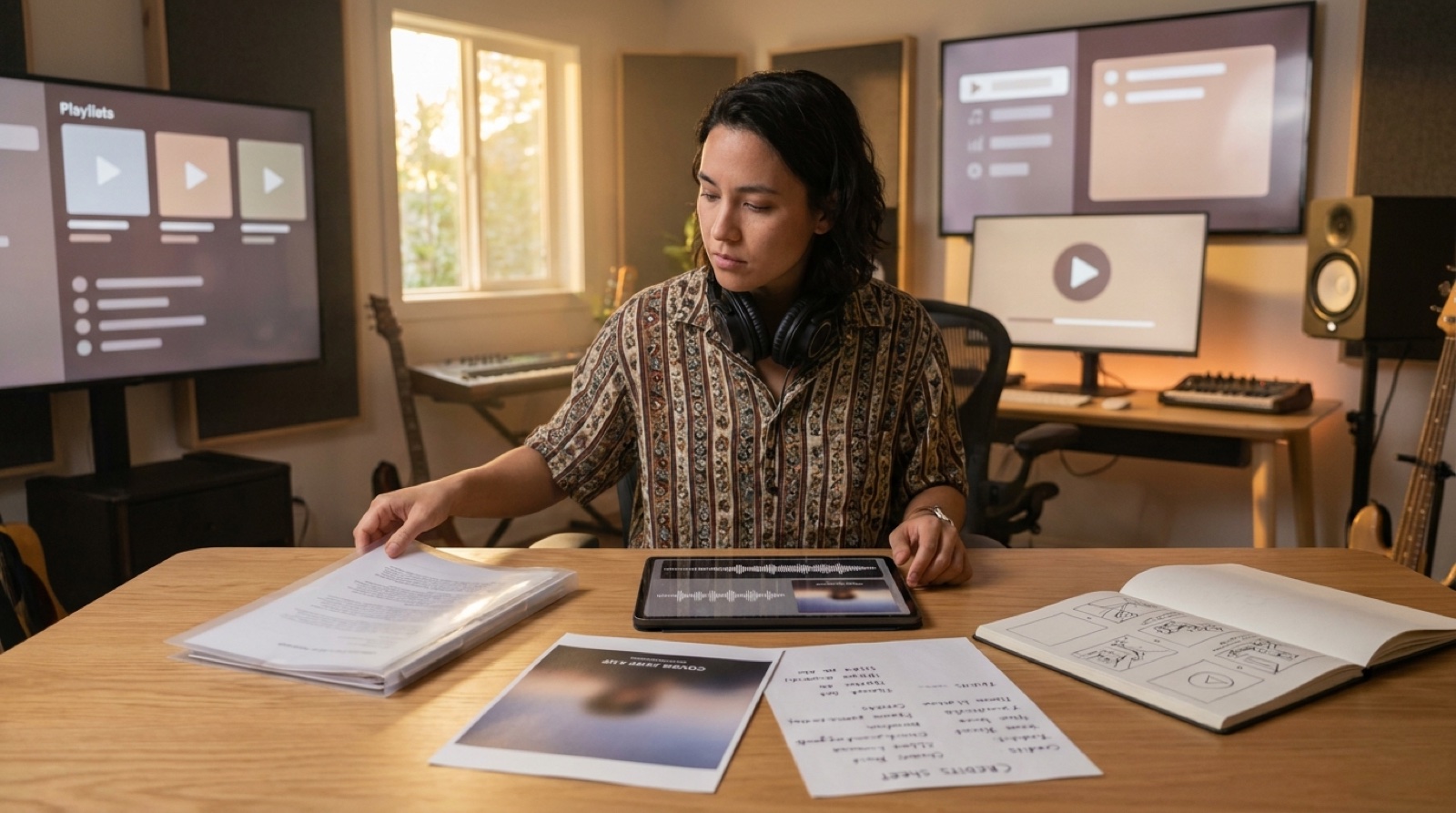
A simple release page can collect the song, video, credits, artist note, cover art, and links in one controlled place. It gives fans, collaborators, curators, and platform reviewers a cleaner source than scattered posts.
The page does not need to over-explain the tools. It should make the release feel finished. Give people the context they need to understand the project, then let the song and video carry the mood.
If you want the release to feel bigger than one upload, read AI music release page: make one song feel like a real launch.
Use platform fear as a quality gate
The healthiest question is not, what if every platform turns hostile? It is, would this release still look intentional if someone checked it closely?
If the answer is no, fix the package. Clarify the identity. Clean up the metadata. Save the proof files. Replace the generic thumbnail. Build a video world that belongs to the song.
Platform risk will keep changing. A clearer artist identity gives you something steadier: a release that looks authored before anyone asks for proof.