YouTube retention
The first 30 seconds of an AI music video matter most
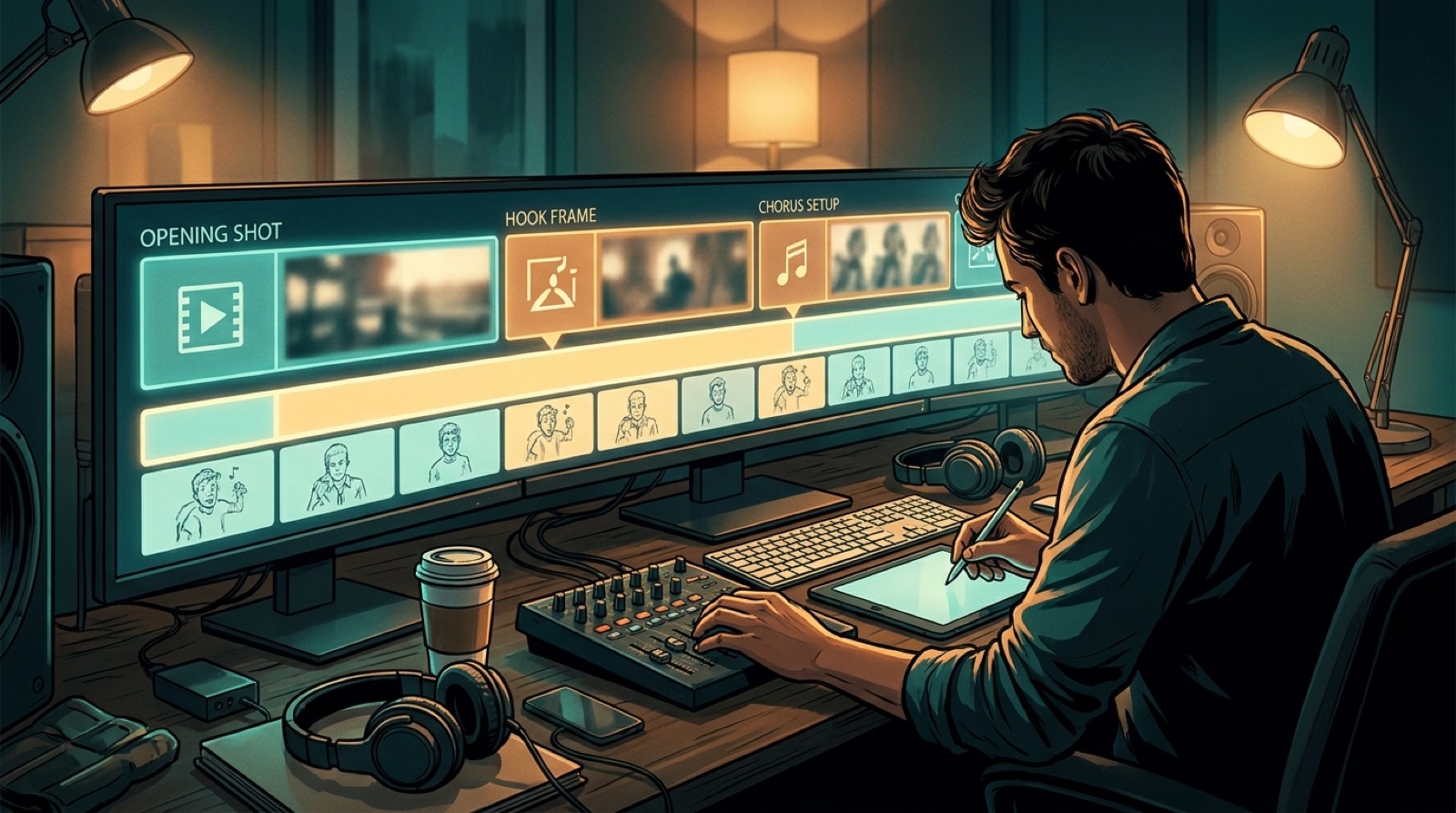
The music video first 30 seconds decide whether a viewer gives the song a real chance. That is especially true for AI music videos, because the audience is still learning what kind of release they are watching.
If the opening feels random, the viewer assumes the rest of the video will be random too. If the first shot, title frame, and early motion feel connected to the song, people relax into the track.
For artists using SceneLore, the opening is not just a preview. It is the promise of the whole visual world.
Start with the first visual promise
The first image should tell the viewer what kind of song this is before the lyrics explain it. A lonely street, a lit club corridor, a strange desert shrine, a bedroom full of old equipment, each one makes a different promise.
Many AI music videos lose people because the first shot is only pretty. It has color and motion, but no direction. The viewer sees a nice image, then waits for the video to explain itself. That wait is where retention drops.
Pick one opening idea that the video can keep paying off: a place the song keeps returning to, a face the viewer can recognize, a color mood tied to the chorus, or a symbolic object from the lyrics. This does not need to be complicated. A strong first shot can be as simple as the cover character walking into frame while the first synth line starts.
Do not waste the title frame
A title frame can help, but only when it feels like part of the release. A plain text card at the start often feels like a placeholder. It delays the video instead of opening it.
If you use a title frame, make it do visual work. Keep it short. Let the art, motion, and color carry the mood. A title card should feel like the cover image has started breathing, not like a slide before the actual video begins.
For YouTube, the first frame also affects how the video feels in previews and shares. A dull opening can make a strong song look unfinished. A clear title moment, built from the same visual world as the thumbnail and cover art, makes the release feel more intentional.
Set up the chorus before it arrives
Most songs ask for some kind of lift. The first 30 seconds should prepare that lift instead of spending all the visual energy too early.
Think of the opening as a ramp. The verse can introduce the place, the character, or the conflict. The pre-chorus can add pressure. The chorus can open the frame, change the light, reveal a crowd, shift the camera, or show the full version of the image you teased earlier.
This is where AI video can either help or hurt. It is easy to generate a series of impressive clips. It is harder to make those clips feel like they belong to the same song. SceneLore works best when you give it a visual anchor early, then let the video build around that anchor instead of swapping ideas every few seconds.
For a slower track, the ramp might be emotional. For a hard electronic track, it might be kinetic. For a dark pop song, it might be a gradual reveal. The point is the same: the first 30 seconds should make the chorus feel earned.
Keep image continuity obvious
Viewers may not notice continuity when it works, but they notice when it breaks. If the opening starts with one character, one room, and one color mood, then cuts to a totally unrelated world, the viewer has to restart the story in their head.
That mental reset is expensive. It makes the video feel like a demo reel instead of a release.
Before generating the full video, decide what must stay stable: the main character, main location, album-cover color palette, emotional tone, amount of camera movement, and level of realism. You can still vary the shots. In fact, you should. But the variation needs to feel like different angles on the same world.
A simple opening plan
If you are not sure how to start, use a plain five-beat plan:
- First frame: show the core visual world.
- First movement: make the image feel alive without changing the idea.
- First lyric or motif: connect the visual to the song.
- Pre-chorus or build: add pressure, speed, or contrast.
- Chorus entry: reveal the bigger version of the world.
This plan is enough for most releases. It keeps the opening from becoming a random montage, and it gives the viewer a clear path into the song.
What to avoid
Avoid opening with the most spectacular shot if it has no connection to the song. Avoid switching styles before the viewer understands the first one. Avoid long blank intros unless the audio truly needs them. Avoid text that explains what the video should make people feel. The opening does not need every idea at once. It needs to choose the first doorway.
Make the first 30 seconds before you make the full video
A practical way to improve an AI music video is to test the opening before committing to the whole render. If the first 30 seconds feel coherent, the full video has a better chance. If they feel confused, adding more minutes will not fix the problem.
SceneLore is built for full-song release videos, but the first moments still carry the weight. Upload the finished song, start from a strong visual anchor, and make the opening feel like the song already has a world.
That is what keeps people watching long enough for the music to do its job.
YouTube says its analytics retention reports help creators see where viewers keep watching or leave a video, which is why the opening matters so much for a release upload. YouTube audience retention is worth checking after each publish.
Make the opening feel like a real release
Upload the finished song, start with one strong visual anchor, and let SceneLore build a full music video around the world your first 30 seconds promise.
Create Your First VideoFrequently asked questions
How long should an AI music video intro be?
Most AI music video intros should be short. If the song starts quickly, the video should start quickly too. A slow intro can work when the image has clear mood, movement, and a reason to stay.
Should I put the song title at the start of the video?
You can, but the title should feel designed into the visual world. A plain title card often weakens the opening. A short title moment based on the cover art or main image usually works better.
What is the best first shot for an AI music video?
The best first shot is the one that tells the viewer what world the song lives in. It can be a character, place, object, or mood, as long as the rest of the video keeps building from it.