Most independent music releases do not arrive on a neat software billing schedule. You might make three Suno tracks in a week, then disappear into writing, mixing, or promotion for a month. A subscription can feel fine when you are using a tool every day. It feels worse when the card gets charged while your next song is still half finished.
That is why pay-as-you-go pricing matters for AI music video tools. The question is not only whether a generator can make something good. The question is whether the pricing fits the way real creators release music.
Why credits fit music releases better
Music videos are tied to moments. A finished single, a YouTube upload, a launch week, a playlist push, a visual for a song that suddenly starts getting attention. If you only need a video when one of those moments happens, credits are easier to understand than a recurring plan.
With credits, you can buy what you need for the next release and keep the focus on the output. The useful test is simple: can this tool turn my song, cover image, or finished audio into a video I can actually post? If yes, the pricing should support that one job instead of pushing you into a long commitment.
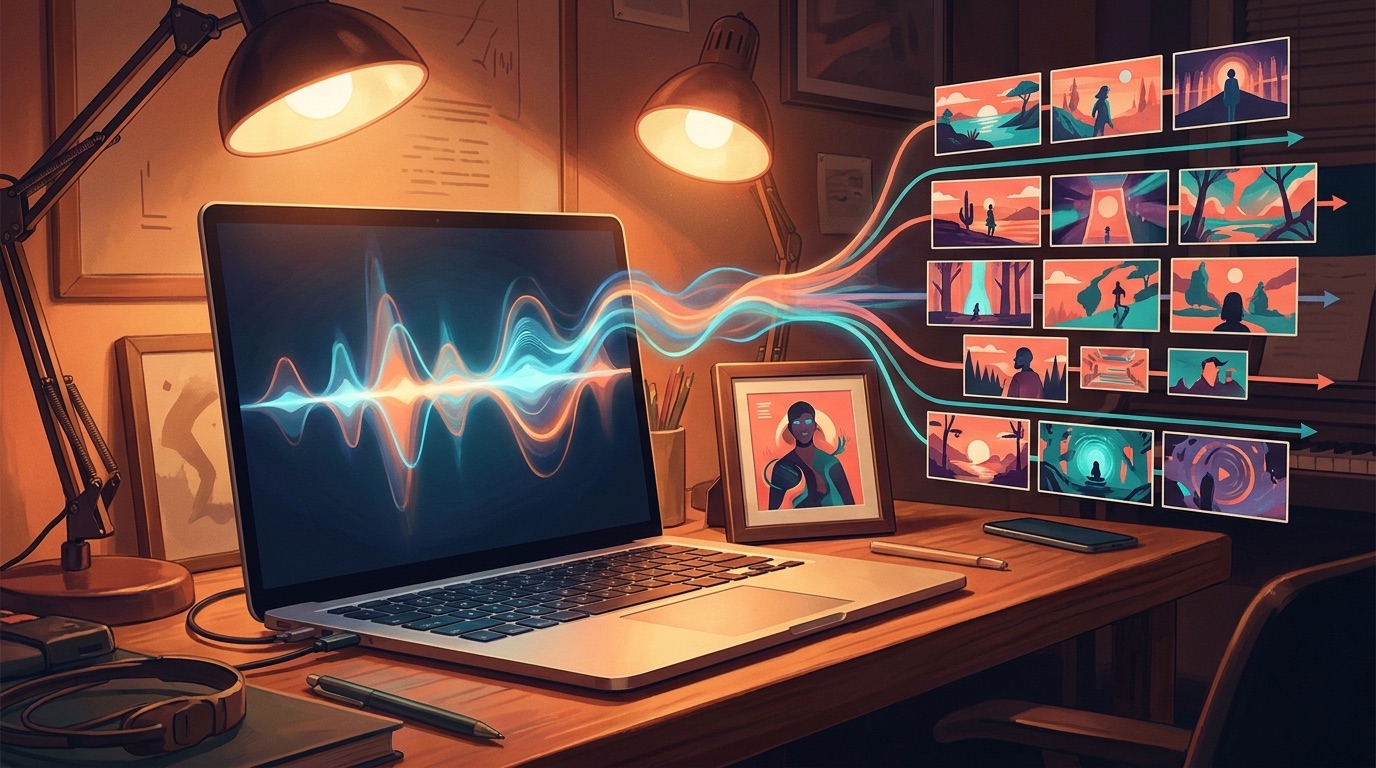
SceneLore is built around that idea. You can start from a song or a single image, then create a full-length AI music video without paying for a subscription you may not use next month.
What pay-as-you-go should still include
Cheap credits are not enough if the result still needs hours of repair. A good pay-as-you-go music video generator should cover the whole track, not just the first impressive clip. It should keep the style steady, avoid random visual jumps, and export a file that works for YouTube, social posts, or a release page.
This is where many AI video workflows get expensive in a hidden way. A tool might look affordable per clip, but if you have to make twenty clips, choose the best ones, edit them together, fix timing, and rebuild scenes that drift off style, your real cost is time. For small creators, that can be worse than the software bill.
SceneLore tries to remove that middle work. The product reads the release as a full sequence, so the goal is a complete music video rather than a pile of short clips. That matters if you are running a faceless music channel, publishing AI songs, or giving an indie release a stronger visual identity.
When a subscription still makes sense
A monthly plan can be worth it if you publish constantly. If you run a label, agency, or channel that needs several videos every week, predictable subscription pricing might be easier for planning. The same is true if you have a team using the tool every day.
For everyone else, pay-as-you-go keeps the pressure lower. You do not have to produce just to justify the bill. You can wait until the song is ready, buy credits, make the video, and move on to promotion.
How to judge the real value
Before buying credits anywhere, look past the price label. Ask whether the tool can handle your full song length. Check whether it can use a finished track or one strong artwork as the starting point. Look for a clear export path, because a pretty preview is not the same as a usable MP4.
Also check whether the tool is honest about creative control. A good generator should reduce the editing burden, but you still need the final video to match the mood of the song. If the visuals feel random, the video will look like filler even if the render was cheap.
For YouTube specifically, Google says thumbnails and titles help viewers decide what to watch, while the video itself needs to satisfy that click. That is useful to remember here. Your music video is not decoration. It is part of the release package, and it needs to hold attention after the first frame. Source: YouTube Help on video packaging.
A simple release workflow
Start with the finished song. Pick the clearest visual direction you have, either cover art, a character, a location, or a mood. Generate the full music video before you start cutting extra promo clips. Once the main video works, you can pull stills, Shorts ideas, and teaser moments from a stronger source.
If you are comparing tools, try one song first. Do not judge from a demo that only shows ten seconds. A music release needs the middle and final stretch to hold together too.
When you are ready, create your first SceneLore video with credits and see whether one finished song can become a full visual release without turning into another editing project.
FAQ
What is a pay-as-you-go music video generator?
It is a generator where you buy credits or pay for individual renders instead of keeping a monthly plan active.
Is pay-as-you-go better for Suno and Udio creators?
Often, yes. Many AI music creators release in bursts, so credits can fit better than a monthly subscription.
Can SceneLore make a full video from one song?
Yes. SceneLore is designed to turn a song or single image into a full-length AI music video.