Release strategy
What makes an AI music release strategy feel real?
An AI music release strategy for artists who want songs, artwork, videos, credits, and clips to feel intentional instead of disposable.
An AI music release strategy feels real when the song arrives with signs of care around it. The listener may not know which model helped with the track, or which tool made the video, but they can tell when the release has a point of view.
That is the part many AI-assisted artists skip.
A finished song is only one part of the release. The cover, video, title, credits, description, thumbnail, and short clips all tell the listener whether this is a throwaway upload or a piece of work the artist wants to stand behind.
The difference is not expensive production. It is consistency.
Start with one clear promise
Before you make artwork or a video, decide what the release is promising.
Is it a lonely synth track about a city at night? A fake 1980s power ballad? A comic country song? A dark cinematic single from a fictional artist?
The promise does not need to be clever. It needs to be clear enough that every visual choice can support it. When the artwork says one thing, the video says another, and the upload title says a third, the release starts to feel assembled instead of directed.
Write one sentence for yourself before you make assets:
This song should feel like [mood] in [place or world], seen through [artist point of view].
That sentence becomes the test for everything else.
Give the release a visual anchor
Most AI music releases look weak when every asset comes from a different prompt. The cover has one character. The video has five unrelated scenes. The thumbnail uses a different style again. Nothing is wrong on its own, but the release does not feel like one object.
Use one strong visual anchor. It can be a face, a room, a car, a city, a color palette, a stage setup, or even one piece of cover art.
Then reuse it.
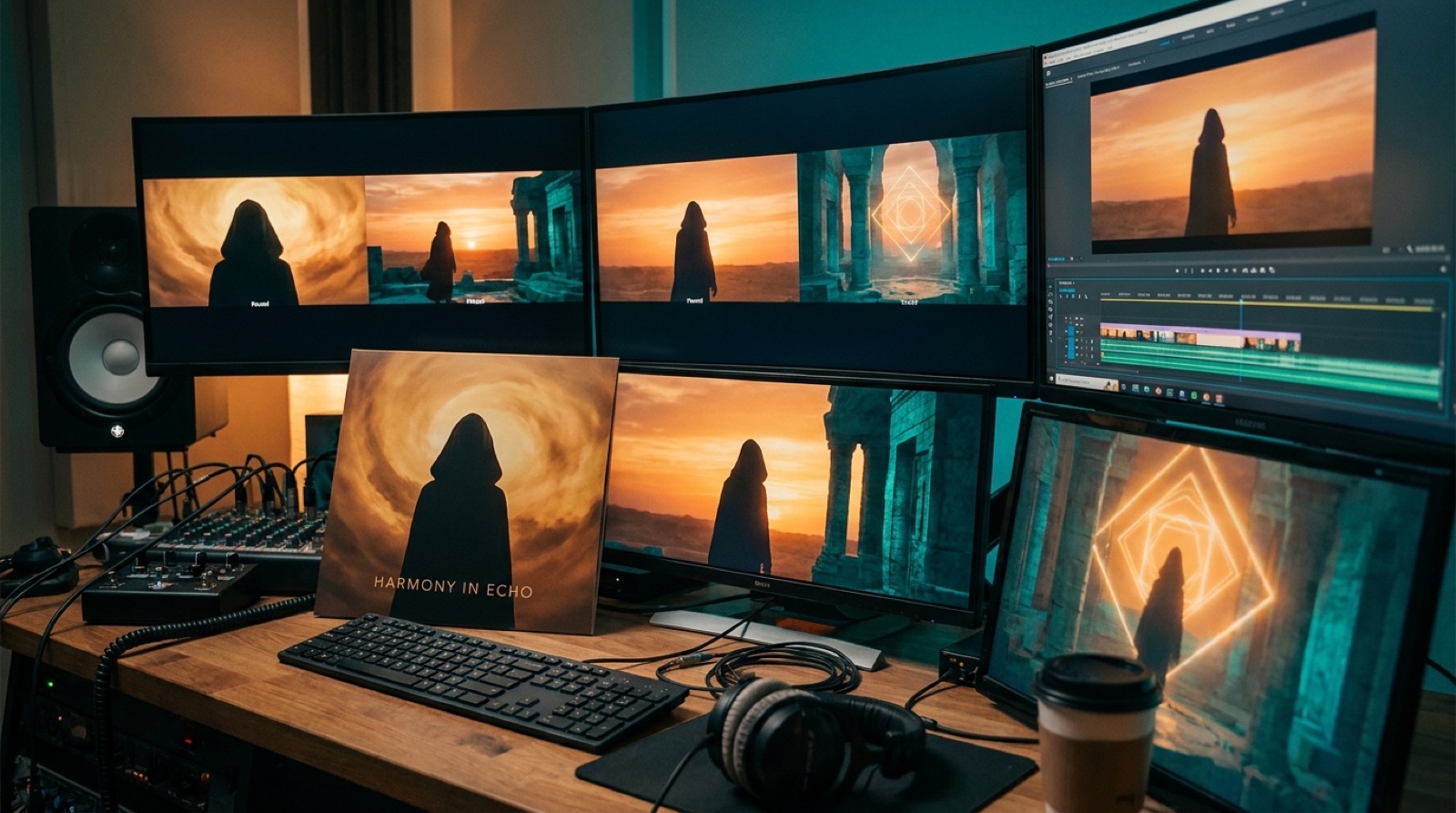
The cover can become the first frame of the video. The video can carry the same colors. The thumbnail can use the same world with a clearer focal point. Short clips can borrow the strongest motion from the full video.
SceneLore is built around this kind of release thinking. You can start from a finished song, cover image, or idea, then turn it into a full music video that keeps the same mood instead of drifting from shot to shot.
Make the video explain the song
A music video does not need a complicated plot. It does need to make the song easier to understand.
For a chorus, show the emotional peak. For a verse, show the world the singer lives in. For an instrumental section, let the image breathe instead of adding random motion. If the lyrics mention a door, road, window, crowd, or memory, use that detail as a visual cue.
The viewer should feel that the video was made for this song, not for any song with the same tempo.
This matters even more for AI-assisted music because listeners are already looking for signs of human intent. A connected video gives them those signs quickly.
Treat metadata as part of the package
Metadata sounds boring, but it affects trust.
Use a stable artist name. Use the same spelling everywhere. Keep song titles clean. Write descriptions that explain the release in normal language. Credit tools or collaborators when that is appropriate for the platform and your own standards.
YouTube asks creators to disclose realistic altered or synthetic content when it could mislead viewers. Their policy is about viewer context, not shame. For AI musicians, clear credits and descriptions can make the release feel more confident, not less artistic.
The same applies to file names and internal folders. Keep the cover, video, clips, prompt notes, and upload copy in one release folder. When you come back in three months to make a remix, lyric video, or follow-up single, you will know what belongs to the release.
Build a small release kit
A real release usually has more than one asset. You do not need a huge campaign, but you do need enough material to show up properly in the places where people discover music.
For one AI-assisted song, make:
- One square cover image
- One full music video for YouTube
- One clean thumbnail
- Two or three short vertical clips
- A short release description
- A simple credit note
- A saved prompt and asset folder for later reuse
This is not busywork. It protects the song from looking like a single experiment dropped into a feed.
The full video gives the release a home. The clips give people a way in. The cover and thumbnail make the first impression. The description and credits answer basic trust questions.
Keep the artist identity repeatable
One release can look good by accident. A real artist identity has to repeat.
If you are building an AI-assisted artist, keep a short visual bible. Save the colors, recurring objects, character details, camera style, typography notes, and themes that belong to the project. You can keep it in a plain note.
For the next release, reuse some of those details and change others. The listener should feel a connection without seeing the same image again and again.
This is where many AI music channels lose momentum. They make a strong song, then restart the visual identity from zero for the next upload. The channel becomes a pile of experiments instead of a world.
Use SceneLore when the release needs to feel finished
SceneLore helps AI musicians and independent artists turn finished songs into full music videos with a connected visual direction. It is useful when a static upload feels too thin, but a manual edit would slow the release down.
Bring the song. Bring the mood. Bring a cover image if you have one.
Then build a video that makes the release feel like it belongs to an artist, not just to a generator.
FAQ
What is an AI music release strategy?
An AI music release strategy is the plan for how an AI-assisted song will be packaged and published. It includes the artist identity, cover art, video, thumbnail, description, credits, short clips, and the way those assets connect.
How do I make an AI song feel less generic?
Start with one clear visual anchor and repeat it across the cover, video, thumbnail, and clips. Add specific details from the song's mood or lyrics instead of using generic music visuals.
Do AI musicians need full music videos?
Not every song needs a full video, but a full video helps when the release is meant for YouTube, social clips, playlist pitching, or artist branding. It gives the song a stronger visual home than static cover art.